In an era where environmental conservation is paramount, the construction and infrastructure sectors are increasingly scrutinized for their ecological footprint. Soil stabilization, a technique that enhances the engineering properties of soil through mechanical or chemical means, emerges as a key player in promoting sustainability. As experts in Brazil soil stabilization solutions at Brazil Watanabe Soil Stabilizer Machine Co., Ltd., we recognize the profound impact that soil stabilizers have on reducing environmental degradation while supporting robust development. These machines not only fortify soil for roads, airports, and buildings but also align with global sustainability goals by minimizing resource consumption and habitat disruption. Particularly in Brazil, where vast ecosystems like the Amazon rainforest coexist with rapid urbanization in cities such as São Paulo and Rio de Janeiro, soil stabilizers offer a pathway to balance progress with planetary health.

The Fundamentals of Soil Stabilization and Its Environmental Relevance

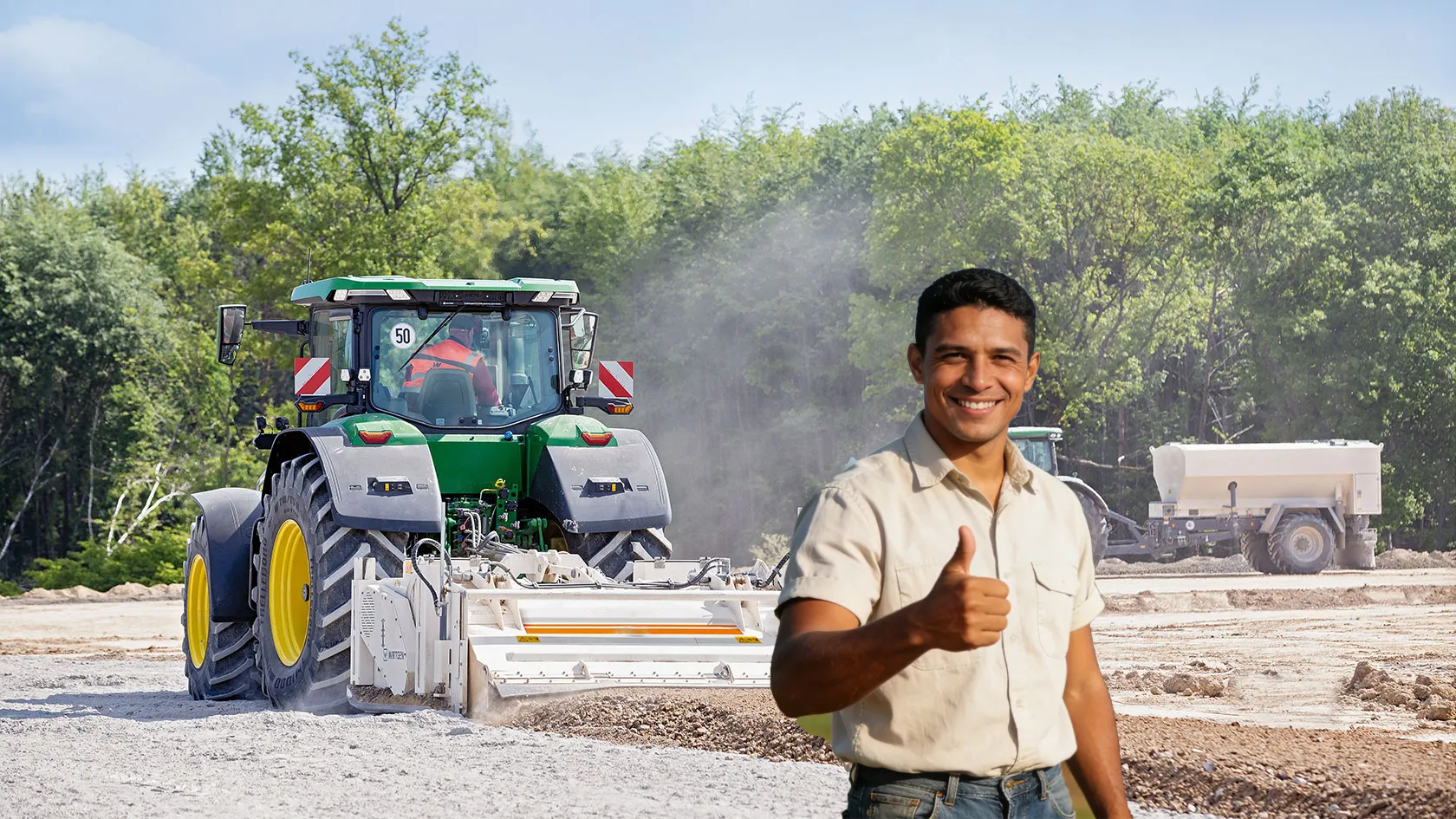
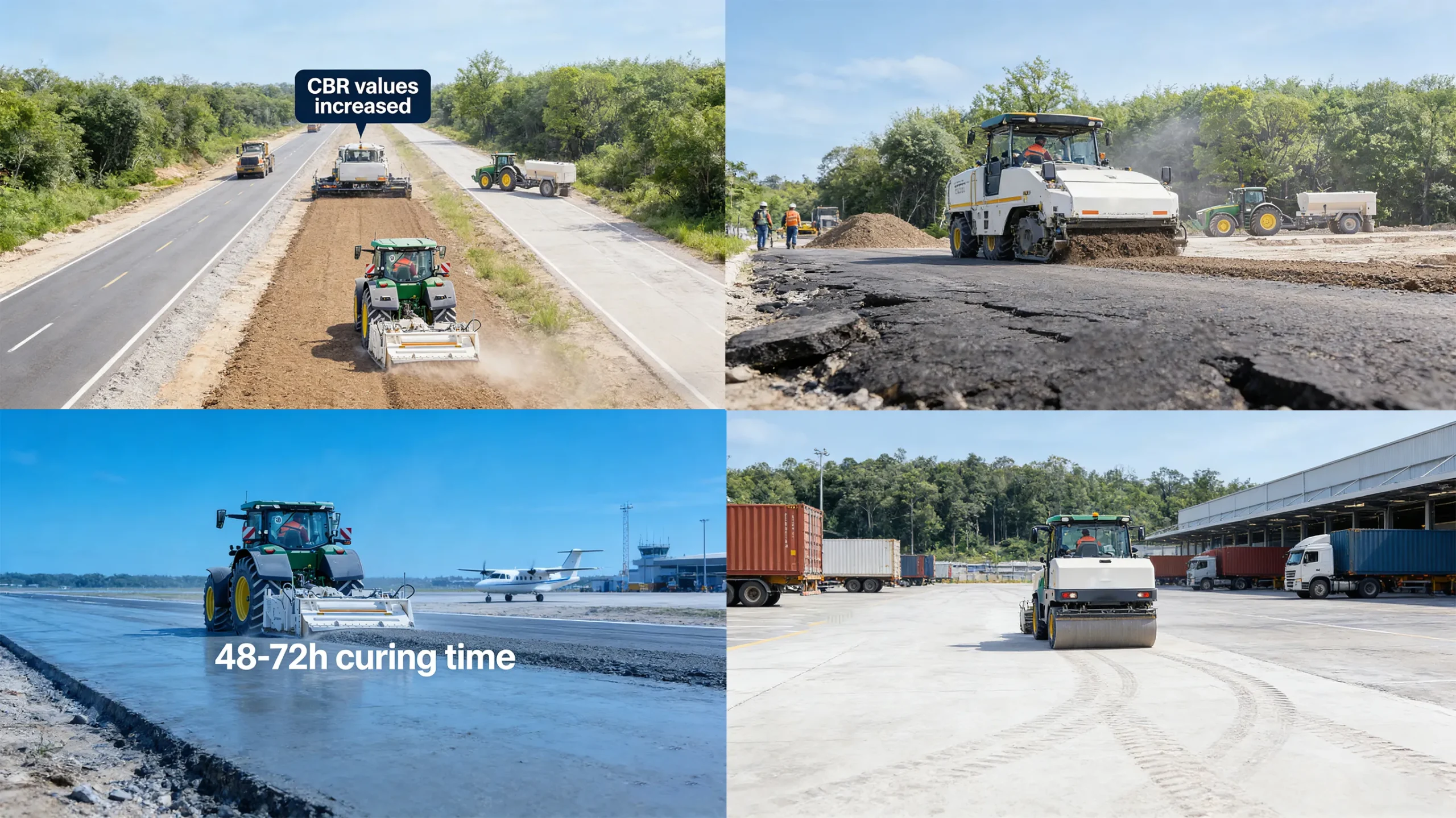
At its core, soil stabilization involves treating natural soil to improve its strength, durability, and resistance to environmental stresses. Traditional methods often relied on extensive excavation and replacement with imported materials, leading to significant ecological costs. In contrast, modern soil stabilizers—heavy machinery equipped with rotating drums or rotors—mix stabilizing agents directly into the in-situ soil, transforming weak or unstable ground into a reliable base without the need for massive earthworks.

From an environmental perspective, this in-situ approach is revolutionary. By avoiding the extraction and transportation of virgin aggregates, soil stabilizers drastically cut down on carbon emissions associated with mining and hauling. In Brazil, where the transportation sector contributes heavily to greenhouse gas outputs, adopting soil stabilization in projects across the Cerrado savannas or the Pantanal wetlands can reduce fuel consumption by up to 50% compared to conventional methods. Moreover, stabilizers help combat soil erosion, a pressing issue in Brazilian agriculture and forestry, where heavy rains in regions like the Northeast’s Caatinga biome wash away topsoil, leading to desertification and biodiversity loss.

The agents used in stabilization—such as lime, cement, fly ash, or even eco-friendly alternatives like enzymes and polymers—further enhance sustainability. Fly ash, a byproduct of coal combustion, repurposes industrial waste that would otherwise pollute landfills. In Brazilian industrial hubs like Minas Gerais, integrating such materials into soil stabilization not only recycles waste but also improves soil pH in acidic terrains, fostering better vegetation regrowth post-construction. This circular economy model underscores how soil stabilizers contribute to waste reduction and resource efficiency, aligning with Brazil’s National Solid Waste Policy.

Soil Stabilizer Machine Product

Reducing Carbon Footprint Through Efficient Construction Practices

One of the most significant environmental roles of soil stabilizers lies in their ability to lower the carbon footprint of infrastructure projects. Construction activities globally account for a substantial portion of CO2 emissions, and in Brazil, with its ambitious infrastructure plans under programs like the Growth Acceleration Program (PAC), minimizing these emissions is crucial. Soil stabilizers achieve this by enabling the use of local soils, thereby eliminating the need for long-distance material transport.

Consider the energy-intensive process of quarrying and crushing aggregates: it involves heavy machinery, explosives, and diesel-powered trucks, all emitting pollutants. By stabilizing existing soil on-site, operators can achieve comparable or superior engineering outcomes with far less energy input. For instance, in Brazilian road construction along the Trans-Amazonian Highway, soil stabilizers have been employed to treat soft, organic-rich soils, reducing the project’s overall carbon emissions by approximately 30-40%. This efficiency stems from shorter project timelines—stabilization can be completed in days rather than weeks—further cutting idle machinery emissions.

Additionally, advanced soil stabilizer models incorporate low-emission engines and precision controls that optimize fuel use. In urban Brazilian settings like Brasília, where air quality is a concern amid growing traffic, these machines help maintain cleaner construction sites. The integration of GPS and telematics allows for precise application, avoiding over-treatment and excess material usage, which in turn prevents unnecessary chemical runoff into waterways. This is particularly vital in Brazil’s riverine systems, such as the São Francisco River basin, where pollution from construction can harm aquatic ecosystems.

Beyond direct emissions, soil stabilizers promote long-term carbon sequestration. Stabilized soils support healthier vegetation, as treated grounds resist compaction and erosion, allowing roots to penetrate deeper and capture more atmospheric carbon. In reforestation efforts in deforested areas of the Brazilian Amazon, stabilized bases for access roads ensure minimal disturbance to surrounding forests, facilitating natural regeneration and carbon sink preservation.

Mitigating Soil Erosion and Land Degradation

Soil erosion poses a severe threat to environmental sustainability, accelerating land degradation and contributing to sedimentation in rivers and reservoirs. In Brazil, where agricultural expansion in the Mato Grosso state has led to widespread erosion, soil stabilizers play a defensive role by enhancing soil cohesion and structure. The mechanical mixing action of the stabilizer’s rotor breaks down clods and incorporates binders that bind particles together, creating a erosion-resistant layer.

This is especially relevant in slope stabilization projects along Brazilian highways, such as those traversing the Serra do Mar mountain range near São Paulo. Unstable slopes can lead to landslides during the rainy season, not only endangering lives but also causing habitat fragmentation. By applying soil stabilizers, engineers can reinforce these areas with minimal excavation, preserving native flora and fauna. Studies from Brazilian environmental agencies like IBAMA highlight that stabilized soils reduce erosion rates by up to 80%, safeguarding biodiversity hotspots.

Furthermore, in coastal regions like those in Bahia, where saline intrusion exacerbates soil instability, bitumen-based stabilization waterproofs the ground, preventing further degradation from tidal influences. This approach aligns with Brazil’s coastal management strategies, protecting mangroves and dunes that serve as natural barriers against climate change-induced sea-level rise. By extending the lifespan of infrastructure, soil stabilizers reduce the frequency of repairs and reconstructions, thereby conserving resources and minimizing repeated environmental disturbances.

Promoting Water Conservation and Quality

Water scarcity and pollution are intertwined with unsustainable land use, and soil stabilizers address both through improved permeability control and runoff management. Untreated soils often lead to excessive water infiltration or rapid runoff, causing flooding or aquifer depletion. Stabilized soils, however, can be engineered for optimal drainage, reducing flood risks in vulnerable Brazilian areas like the floodplains of the Paraná River.

In agricultural applications, such as stabilizing soil for sugarcane plantations in Pernambuco, these machines help retain moisture by creating a more uniform soil matrix, decreasing irrigation needs. This is critical in Brazil’s semi-arid Northeast, where water resources are strained, and efficient soil management can save millions of liters annually. Moreover, by incorporating permeable stabilizers, projects can enhance groundwater recharge, supporting ecosystems in regions like the Guarani Aquifer, one of the world’s largest freshwater reserves spanning Brazil and neighboring countries.

On the pollution front, soil stabilizers prevent the leaching of contaminants. Traditional construction often introduces loose sediments into waterways, leading to turbidity that harms fish populations. In Brazilian mining areas like Carajás in Pará state, where soil disturbance is inevitable, stabilization minimizes sediment runoff, complying with stringent environmental regulations. The use of biodegradable stabilizers further ensures that no harmful residues persist, fostering cleaner rivers and lakes essential for indigenous communities and wildlife.

Biodiversity Preservation in Sensitive Ecosystems

Brazil’s unparalleled biodiversity, hosting over 20% of the world’s species, demands construction practices that minimize habitat loss. Soil stabilizers facilitate this by enabling low-impact development. Instead of clearing vast areas for fill material, in-situ stabilization preserves existing vegetation and topsoil layers, which are vital for microbial life and nutrient cycling.

In the Amazon biome, where deforestation rates have fluctuated but remain a global concern, soil stabilizers have been instrumental in sustainable logging roads and eco-tourism infrastructure. By treating narrow corridors, these machines limit the footprint, reducing edge effects that expose forests to invasive species and fires. Case studies from the Brazilian Institute for the Environment and Renewable Natural Resources (IBAMA) demonstrate that stabilized paths in protected areas like the Tapajós National Forest maintain ecological corridors for species migration.

Similarly, in urban expansion projects in Rio de Janeiro’s favelas, soil stabilizers reinforce slopes without extensive grading, protecting adjacent Atlantic Forest remnants. This not only conserves biodiversity but also enhances urban resilience against landslides, benefiting human and natural communities alike. The role here extends to post-disaster recovery; after events like the 2011 floods in the Serrana region, stabilizers aided in rapid, eco-friendly rebuilding, allowing ecosystems to rebound faster.

Economic and Social Dimensions of Sustainable Soil Stabilization

While environmental benefits are central, the sustainability of soil stabilizers encompasses economic and social aspects, creating a holistic impact. Economically, by reducing material and transport costs, these machines make projects more viable in remote Brazilian locales, such as the Roraima state borders. Savings can be redirected toward environmental offsets, like reforestation programs, amplifying sustainability.

Socially, safer and more durable infrastructure from stabilized soils improves community access to services, particularly in underserved rural areas of the Brazilian North. This fosters equitable development, aligning with the United Nations Sustainable Development Goals (SDGs) that Brazil has committed to. Moreover, training programs for operators emphasize environmental stewardship, empowering local workforces in states like Amazonas to adopt green practices.

In indigenous territories, respectful application of soil stabilizers—consulting with communities like the Yanomami—ensures cultural preservation alongside environmental protection. This integrated approach positions soil stabilization as a tool for social justice in Brazil’s diverse societal landscape.

Technological Advancements Enhancing Sustainability

Innovation in soil stabilizer design is propelling environmental sustainability forward. Modern machines feature hybrid power systems, blending diesel with electric components to cut emissions. In Brazil’s renewable energy push, with abundant solar and wind resources, electric stabilizers could soon dominate, especially in sunny regions like the Northeast.

Sensor technology allows real-time monitoring of soil parameters, ensuring minimal stabilizer use and reducing chemical inputs. For Brazilian soils varying from red latosols in the Central Plateau to sandy podzols in the South, adaptive systems optimize treatments, preventing overuse that could alter local pH balances detrimentally.

Biotech integrations, like microbial stabilizers, harness natural bacteria to bind soil particles, offering a green alternative in sensitive areas. Research from Brazilian universities, such as the University of São Paulo, shows these methods enhance soil fertility without synthetic additives, supporting organic farming in Rio Grande do Sul.

Soil Stabilizer Machine Application

Challenges and Solutions in Implementing Sustainable Practices

Despite their benefits, challenges in adopting soil stabilizers for sustainability include initial costs and skill gaps. In Brazil’s developing regions, high upfront investments can deter small-scale projects. Solutions involve government incentives, like tax breaks under the Green Economy Program, making technology accessible.

Skill development is addressed through certifications and workshops, ensuring operators in states like Ceará understand eco-friendly techniques. Regulatory frameworks, evolving under Brazil’s Environmental Code, mandate sustainability assessments, pushing industry-wide adoption.

Overcoming resistance from traditional methods requires education on long-term savings, as stabilized infrastructure lasts longer, reducing lifecycle environmental impacts.

Case Studies: Brazilian Success Stories

Examining real-world examples illuminates the role of soil stabilizers. In the Belo Monte Dam project in Pará, stabilization minimized river sedimentation, protecting fish habitats in the Xingu River. This preserved biodiversity while enabling energy production.

In São Paulo’s Rodoanel ring road, soil stabilizers treated expansive clays, reducing excavation by 60% and preserving green belts. This urban case highlights air quality improvements from fewer truck trips.

Post-2019 Brumadinho dam disaster in Minas Gerais, stabilizers aided in tailings containment, preventing further soil contamination and aiding ecosystem recovery.

In agricultural realms, stabilizing access roads in Mato Grosso’s soy fields cut erosion, boosting yields sustainably.

These instances showcase how soil stabilizers drive environmental progress in Brazil.

Future Prospects: Soil Stabilizers in a Changing Climate

Looking ahead, as Brazil faces climate challenges like intensified droughts and floods, soil stabilizers will be indispensable. Enhancing soil resilience against extreme weather, they support adaptive infrastructure in vulnerable areas like the Pantanal.

Integration with climate modeling predicts treatment needs, optimizing for future scenarios. Global collaborations could bring cutting-edge tech to Brazil, amplifying impacts.

Policy-wise, aligning with Brazil’s Paris Agreement commitments, stabilizers aid in low-carbon development paths.