Laajalla ja strategisesti kriittisellä território brasileirolla kestävän infrastruktuurin rakentaminen ei ole pelkästään insinööritaitoa; se on kansantalouden elinehto. Centro-Oesten soijapitoisilta tasangoilta Sudesteen teollisuuskeskuksiin rodoviojemme (valtateiden) ja estradas vicinaisiemme (sivuteiden) laatu sanelee globaalin vientikoneistomme tehokkuuden.
Vuosikymmenten ajan tienrakennuksen vakiomenetelmänä oli ”kaivaa ja korvaa” – kallis, hidas ja ympäristölle haitallinen prosessi. Maaperän stabilointiaineiden nousu on kuitenkin mullistanut tämän maiseman. Kuten Brazil Watanabe Soil Stabilizer Machine Co., Ltd:n asiantuntijat....Ymmärrämme, että maaperän stabilointi on tehokkain tapa muuttaa "marginaalinen" tai "heikko" paikallinen maa erittäin suorituskykyiseksi rakenteelliseksi perustaksi.
1. Vertaansa vailla oleva taloudellinen tehokkuus ja ”Custo Brasil” -kulujen väheneminen
Brasiliassa "logistiset kustannukset" tai Asiakas Brasilia on usein paisutettu materiaalien kuljettaman matkan vuoksi. Perinteinen tienrakennus vaatii tuhansia kuorma-automatkoja "huonon" maaperän pois kuljettamiseksi ja "hyvän" louhitun kiviaineksen tuomiseksi.
Materiaalihankintakustannusten poistaminen
A maaperän stabilointiaine antaa sinun työskennellä jo olemassa olevan kanssa. Käyttämällä paikan päällä (paikan päällä) olevaa maaperää, tarve ostaa tuhansia tonneja tuoretta soraa tai murskattua kiveä kaukaa Pedreira (louhos) on käytännössä poistettu. Syrjäisillä alueilla sijaitsevassa hankkeessa Mato Grosso tai TocantinsTämä voi tarkoittaa jopa 40%:n suoria säästöjä projektin kokonaisbudjetissa.
Logistiikka- ja rahtikulujen dramaattinen väheneminen (Fretes)
Kippiautokaluston hallinnan logistinen painajainen on merkittävä taakka kenelle tahansa ennakkoluulo (kunta) tai yksityinen urakoitsija. Käsittelemällä maaperän paikan päällä yksi ainoa Brasilian Watanaben maaperän stabilointiaine voi korvata koko logistisen toimitusketjun työn. Vähemmän kuorma-autoja tarkoittaa:
- Pienempi polttoaineenkulutus (dieselin säästö).
- Vähemmän työmaan liikenteen aiheuttamaa kulumista olemassa olevilla teillä.
- Alennetut työvoimakustannukset kuorma-autonkuljettajille ja työmaakoordinaattoreille.
2. Erinomainen rakenteellinen suorituskyky ja parannetut CBR-arvot
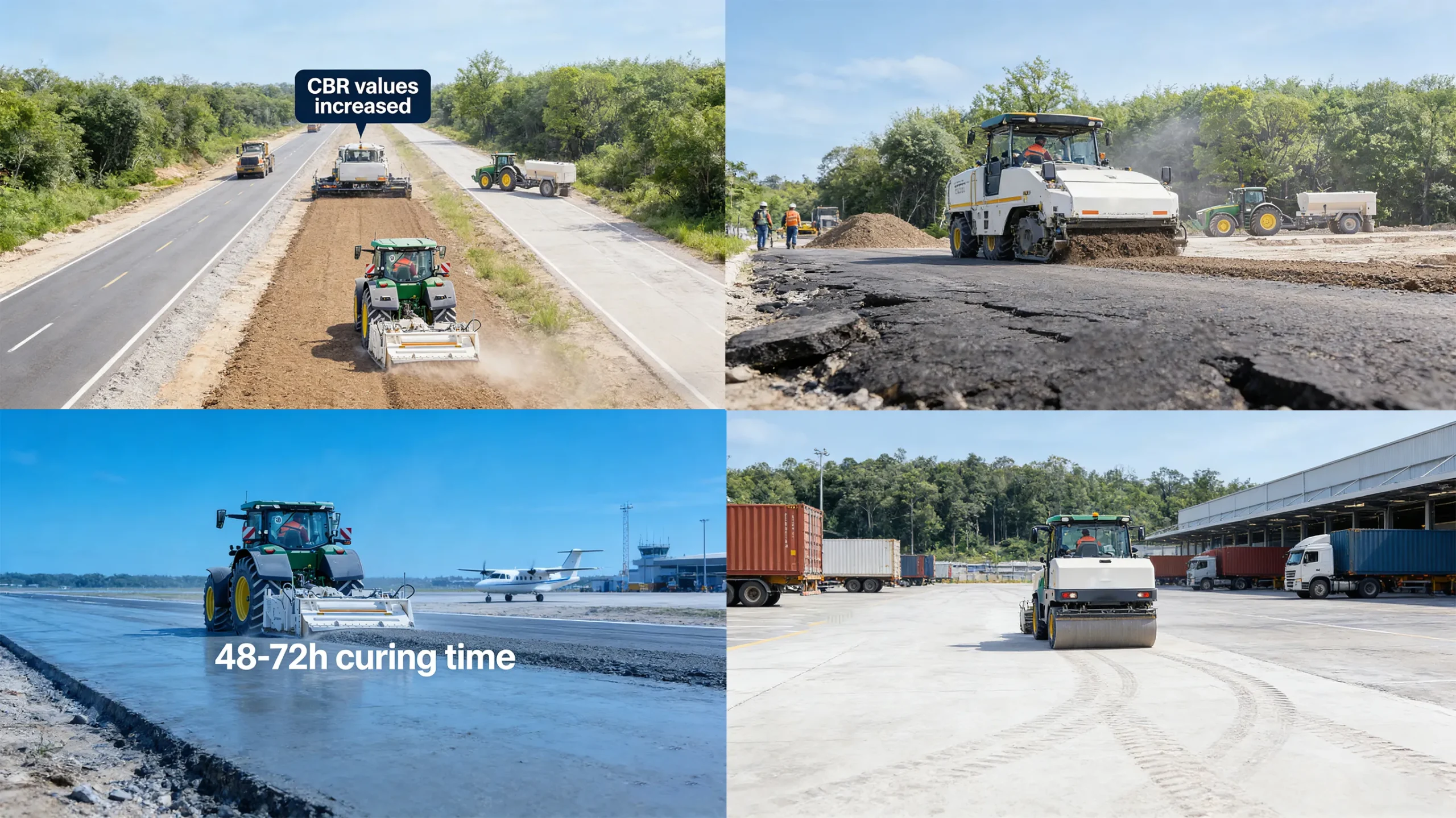
Tien lujuuden perimmäinen mittari on sen Kalifornian laakerisuhde (CBR)Luonnonmaaperät monissa osissa Brasiliaa, erityisesti punaisessa Latossolos, ovat usein erittäin sään vaikutuksille alttiita ja menettävät lujuuttaan kyllästyessään.
Tiheiden perustusten saavuttaminen
Maaperän stabilointiaineen nopea sekoitusroottori jauhaa maaperän tasaiseksi raekokoksi. Kun sideaineita, kuten kcal (lime) tai simento (sementtiä) lisätään, kone luo homogeenisen seoksen, jonka tiheys on paljon suurempi tiivistyksen aikana. Tämä johtaa "laattaefektiin", jossa stabiloitu kerros toimii jäykkänä tai puolijäykkänä alustana, joka jakaa raskaat pyöräkuormat tehokkaammin kuin tavallinen sora-alusta.
Pysyvä kemiallinen muutos
Toisin kuin pelkkä mekaaninen tiivistys, kemiallinen stabilointi luo pysyviä sidoksia.
- Pozzolaaniset reaktiot: Sideaineet reagoivat paikallisen saven piidioksidin ja alumiinioksidin kanssa muodostaen luonnollista sementtiä.
- Kosteudenkestävyys: Kun maaperä on vakiintunut, siitä tulee huomattavasti vähemmän läpäisevä. Tämä on elintärkeää chuvosa-asema (sadekausi) Brasiliassa, mikä estää tien muuttumisen mudaksi ja ylläpitää trafegabilidade (läpäisykyky) raskaille sadonkorjuuautoille.
3. Ympäristönsuojelu: ”Vihreän” Rodovian rakentaminen
Brasilian rakennusteollisuuden on sopeuduttava maailmanlaajuisten ESG-standardien (ympäristöön, yhteiskuntaan ja hyvään hallintotapaan liittyvät standardit) tiukentuessa. Maaperän stabilointi on luonnostaan yksi ympäristöystävällisimmistä prosesseista maanrakennuksessa.
Luonnonvarojen suojelu
Jokainen paikan päällä stabiloitu maatonni on tonni luonnonkiveä, joka jää maahan. Vähentämällä neitsytkiviaineksen kysyntää suojelemme alueiden, kuten Cerrado ja Mata Atlântica tarpeettomalta louhinnalta.
Merkittävä hiilijalanjäljen pienentäminen
Kiviainesten kuljetukseen käytettävät raskaat koneet päästävät ilmaan valtavia määriä $CO_2$:tä. Vähentämällä kuorma-autoliikennettä jopa 90%:lla stabilointihanke alentaa merkittävästi kokonaishiilidioksidipäästöjään. Lisäksi teollisuuden sivutuotteiden, kuten lentotuhkan tai kuonan, hyödyntäminen stabilointiaineina edistää entisestään kiertotaloutta.
4. Nopeutetut projektiaikataulut: Toteutuksen nopeus
Aika on rahaa, varsinkin kun työskentelet ahtaissa olosuhteissa sadonkorjuukausien välillä tai ennen rankkojen trooppisten sateiden saapumista.
Yhden pyyhkäisyn käsittely
Brasilialainen Watanaben maanvakauttaja voi käsitellä, sekoittaa ja tasoittaa merkittävän tieosuuden yhdessä päivässä. Paikan päällä tehtävä prosessi on paljon nopeampi kuin monivaiheinen prosessi, johon kuuluu kaivaminen, hävittäminen, kuljettaminen ja uuden materiaalin levittäminen.
Vähemmän sään aiheuttamia viivästyksiä
Koska stabiloitu maaperä lujittuu nopeasti ja vastustaa veden tunkeutumista, kohteista tulee "säänkestäviä" paljon nopeammin kuin perinteisistä sorakohteista. Tämä mahdollistaa yrittäjät (urakoitsijat) jatkamaan työtä lähes välittömästi rankkasateen jälkeen, mikä pitää projektin aikataulussa ja välttää kalliit seuraamukset, jotka liittyvät liittovaltion tai kuntien sopimusten viivästymiseen.
5. Agronegócion taloudellinen itsemääräämisoikeus
Brasilia on maailmanlaajuinen johtaja soijan, maissin ja naudanlihan tuotannossa. Polku siitä kuitenkin fazenda (maatila) satamaan Santos tai Paranaguá vaivaa usein huonot tieolosuhteet.
Sadonkorjuuvakuutus
Viljelijälle maaperän stabilointiaine on eräänlainen sadonkorjuuvakuutuksen muoto. maan esteet (maatilalla olevat ja tilalle johtavat hiekkatiet) varmistavat, että jopa sateisina vuosina safra (sato) voidaan siirtää markkinoille ilman, että kuorma-autot juuttuvat (atolamentos).
PTO-ominaisuuksia maanviljelijöille
Yksi Brasilian Watanabe-järjestelmän ainutlaatuisista eduista on meidän traktorilla vedettävät maanvakautuslaitteetMonilla suurviljelijöillä on jo tehokkaita traktoreita maanmuokkaukseen. Hinattavat yksikkömme hyödyntävät Tomada de Força (TDP/PTO) näiden olemassa olevien koneiden ansiosta, minkä ansiosta viljelijät voivat ylläpitää omaa infrastruktuuriaan pienemmällä pääomainvestoinnilla verrattuna erillisen itseliikkuvan tienpuhdistuslaitteen ostamiseen.
6. Huollon vähentäminen ja pitkäaikainen kestävyys
Vakaille perustuksille rakennetuilla teillä on paljon pidempi elinkaari kuin perinteisille perustuksille rakennetuilla teillä.
Väsymishalkeilun kestävyys
Asfalttipäällysteisillä teillä yleisin vika on "heijastava halkeilu", joka usein johtuu heikon pohjakerroksen siirtymisestä kuormituksen alaisena. Vakautettu pohja on uskomattoman vakaa ja tarjoaa jäykän tuen, joka minimoi asfalttipinnan taipuman ja pidentää siten kalliiden uudelleenpinnoituskertojen välistä aikaa.
Pölyn torjunta maaseutuyhteisöissä
Päällystämättömillä maaseudun teillä maaperän stabilointi (etenkin käytettäessä polymeerejä tai erikoissideaineita) vähentää merkittävästi pölyä. Tämä on terveyshyöty paikallisille asukkaille ja estää "hienojen hiukkasten" hävikkiä – pienten hiukkasten, jotka pölynä pois puhallettuna johtavat lopulta tienpinnan hajoamiseen.
7. Monipuolisuus: Täyssyvyysrekultivoinnista (FDR) teollisuuspihoille
Maaperän stabilointiaineen hyödyt ulottuvat pelkän "uusien" teiden rakentamisen ulkopuolelle.
Täyden syvyyden talteenotto (FDR)
Monissa osissa Brasiliaa vanhat asfalttitiet ovat pettämässä. Sen sijaan, että vanha asfaltti kaapittaisiin pois ja heitettäisiin pois, maanvakautusaine toimii massiivisena liikkuvana murskaimena. Se jauhaa vanhan asfaltin, sekoittaa sen alla olevaan pohjakerrokseen ja lisää sideainetta luodakseen uuden, vahvemman perustusrakenteen. Tämä on kierrätyksen äärimmäinen muoto.
Teollisuus- ja satamalogistiikka
Konttiterminaalien ja teollisuusvarastojen lattioiden äärimmäiset pistekuormat vaativat perustuksia, jotka eivät painu ajan myötä. Näissä rasituksissa vakiovalinta on stabilointi, joka varmistaa, että betonilaatat pysyvät tasaisina ja halkeilemattomina raskaiden trukkien ja nostureiden painon alla.

8. Miksi valita Brasilia Watanabe? Insinööritieteiden etulyöntiasema
Klo Brasilia Watanabe Soil Stabilizer Machine Co., Ltd.Koneemme on suunniteltu Brasilian ilmaston ja maaperän kemian erityisvaatimuksiin.
Rakennettu "Argissoloille" ja "Latossoloille"
Sekoitusroottorimme on suunniteltu suurta vääntömomenttia varten, ja ne pystyvät tunkeutumaan jopa 500 mm:n syvyyteen kovimpiinkin savimaihin. Terämme on taottu korkealaatuisesta volframikarbidista kestämään rautapitoisten brasilialaisten maaperän kuluttavan luonteen.
Paikallinen luotettavuus ja tekninen tuki
Emme tarjoa vain konetta; tarjoamme kumppanuuden. Syvät juuret alalla brasilian markkinatTarjoamme erikoistunutta teknistä tukea, joka auttaa sinua laskemaan oikeat sideainesuhteet ja optimoimaan koneesi suorituskyvyn juuri sinun alueellesi.
Vankka perusta Brasilian tulevaisuudelle
Maaperän stabilointiaineen käytön edut tienrakennuksessa ovat kiistattomat: se on halvempaa, nopeampaa, vahvempaa ja ympäristöystävällisempää. Brasilian kaltaisessa mannermaisessa maassa meillä ei ole varaa rakentaa tehottomasti.
Ottamalla käyttöön maaperän stabilointiteknologian emme rakenna vain teitä; rakennamme kilpailukykyisemmän, kestävämmän ja verkottuneemman kansakunnan. Prefeituras pyrkivät optimoimaan kuntien budjettejaan suuret tuottajat (Suurille tuottajille), jotka pyrkivät turvaamaan logistiikkansa, maaperän stabilointiaine on nykyaikaisen aikakauden välttämätön työkalu.
Oletko valmis muuttamaan tienrakennustyösi tehokkuutta? Käy verkkosivuillamme osoitteessa soilstabilizermachine.com tutustuaksesi tehokkaiden koneidemme valikoimaan ja löytääksesi täydellisen stabilointiratkaisun seuraavaan projektiisi. Brazil Watanabe: Maailman vakauttamista, hehtaari kerrallaan.
Tekniset tiedot, tapaustutkimukset eri Brasilian osavaltioista ja räätälöidyt tekniset konsultaatiot ovat saatavilla pyynnöstä. Liity edistyksen perustaan jo tänään.