In der weiten und abwechslungsreichen Landschaft der território brasileiro, aus den roten Latosolen der Centro-Oeste den anspruchsvollen Feuchtigkeitsbedingungen der AmazonienDie Stabilität des Untergrunds ist bei jedem Infrastrukturprojekt von größter Bedeutung. Ob es sich nun um den Bau eines Bundesgebäudes handelt oder nicht. Rodovia (Autobahn) oder Verbesserung estradas rurais (ländliche Straßen) für die boomende agronegócioDer Boden muss von einem natürlichen, unberechenbaren Material in ein leistungsstarkes technisches Bauteil verwandelt werden.
Bei Brazil Watanabe Soil Stabilizer Machine Co., Ltd.Wir sind auf die Technologie spezialisiert, die diese Transformation ermöglicht. Aber wie genau funktioniert ein Bodenstabilisator?
1. Die Kernphilosophie: Transformation vor Ort
Das Grundprinzip eines Bodenstabilisators ist die „In-situ“-Verarbeitung. Traditionelle Baumethoden beinhalten das „Ausheben und Ersetzen“ – das Ausheben von schwachem Boden, dessen Abtransport und das Anliefern von teurem Zuschlagstoff aus Steinbrüchen.
A Bodenstabilisator Dieses Verfahren kehrt die Vorgehensweise um. Es nutzt den vorhandenen Boden auf der Baustelle. Durch mechanisches Zerkleinern des Erdreichs und chemische Modifizierung mit Zusätzen erzeugt die Maschine eine dichte, wasserdichte und hochfeste Tragschicht – ohne den logistischen Aufwand tausender LKW-Fahrten (wodurch die hohen Kosten reduziert werden). fretes in Brasilien).
2. Anatomie der Maschine: Das mechanische Herz
Um den Arbeitsablauf zu verstehen, muss man die Maschine verstehen. Bei Brazil Watanabe sind unsere Geräte auf die hohen Drehmomentanforderungen des brasilianischen Geländes ausgelegt.
Der Hochleistungs-Mischrotor
Der Rotor ist die wichtigste Komponente. Es handelt sich um eine massive, horizontale Trommel, die mit Hunderten von Spezialvorrichtungen bestückt ist. Bits oder „Zähne“ aus Wolframcarbid.
- Rotationsgeschwindigkeit: Der Rotor dreht sich je nach Bodendichte mit hoher Geschwindigkeit (oft einstellbar zwischen 100 und 250 U/min).
- Drehmoment und Eindringtiefe: Für die schweren Lehmböden (Argissolos) wie in Südbrasilien festgestellt, ist ein hohes Drehmoment erforderlich, um die Kunststoffschichten zu durchtrennen.
- Schnitttiefe: Moderne Stabilisatoren können bis zu einer Tiefe von 500 mm (50 cm) eindringen und sich vermischen, wodurch in einem einzigen Arbeitsgang ein dickes, tragfähiges Fundament gewährleistet wird.
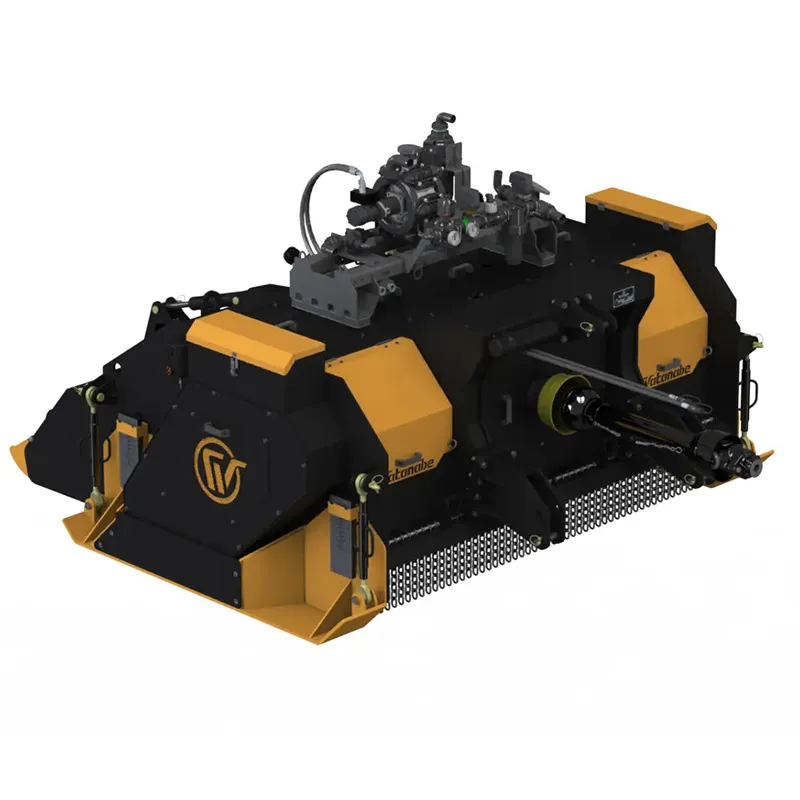
Die Mischkammer (Die Haube)
Der Rotor ist in einer robusten Stahlkammer eingeschlossen. Diese dient nicht nur als Schutzabdeckung, sondern ist gleichzeitig die Verarbeitungszone. Die Innengeometrie der Haube ist so konstruiert, dass eine turbulente Durchmischung entsteht, die sicherstellt, dass jedes Bodenkorn mit dem Stabilisierungsmittel umhüllt wird.
Nebenantriebsintegration (Der Watanabe-Vorteil)
Viele unserer Modelle sind Traktorgezogene BodenstabilisatorenSie nutzen die Zapfwelle (PTO) von Traktoren mit hoher PS-Zahl. Dies ist besonders vorteilhaft für brasilianische Landwirte und lokale Gemeinden (Präfekturen) die bereits schwere Traktoren besitzen und diese ohne die hohen Investitionskosten einer selbstfahrenden Einheit in Straßenbaumaschinen umwandeln möchten.
3. Phase 1: Mechanische Pulverisierung
Der Prozess beginnt mit mechanischer Einwirkung. Natürlicher Boden ist selten einheitlich; er enthält Klumpen, Wurzeln und gelegentlich alten Asphalt von abgenutzten Straßenoberflächen.
Aufbrechen der Bodenmatrix
Während sich der Stabilisator vorwärts bewegt, schlagen die rotierenden Teile mit enormer Wucht auf den Boden. Dadurch wird der Boden zu feinen Partikeln zerkleinert. Warum ist das wichtig? Weil chemische Bindemittel eine große Oberfläche benötigen, um wirksam zu sein. Bleibt der Boden in großen Klumpen, können Kalk oder Zement nicht in den Kern eindringen, was zu inneren Schwachstellen führt.
Umgang mit Recyclingmaterialien (Vollrecycling)
Bei vielen brasilianischen Infrastrukturprojekten stabilisieren wir nicht nur den Boden, sondern recyceln auch alte Straßen. Das Bodenstabilisierungsmittel wirkt wie ein Brecher, der alten, rissigen Asphalt zerkleinert und mit der darunterliegenden Tragschicht vermischt. Dieses Verfahren wird als Vollständige Tiefenwiederherstellung (FDR), eine äußerst nachhaltige Praxis, die in Staaten wie São Paulo Und Minas Gerais.
4. Phase 2: Chemische Modifizierung und Bindung
Sobald der Boden zerkleinert ist, beginnt der eigentliche „Verbesserungs“-Teil des Prozesses mit der Zugabe von Bindemitteln.
Kalkstabilisierung (Die „Cerrado“-Strategie)
In Regionen mit stark sauren und quellfähigen Tonböden, wie zum Beispiel Cerrado, Kalk (cal) ist das bevorzugte Bindemittel.
- Kationenaustausch: Die Calciumionen im Kalk ersetzen die Natrium- oder Magnesiumionen im Ton, wodurch die Tonpartikel „ausflocken“ oder sich zu einer körnigeren, sandartigen Textur zusammenballen.
- Puzzolanische Reaktion: Im Laufe der Zeit reagiert der Kalk mit dem Siliziumdioxid und Aluminiumoxid im Boden und bildet einen natürlichen Zement. Dadurch entsteht eine dauerhafte, gesteinsartige Struktur, die den starken Regenfällen des brasilianischen Sommers sehr gut standhält.
Zementstabilisierung
Für körnigere Böden oder schluffige Materialien, Portlandzement Dabei wird ein Stabilisator verwendet, der den Zement mit dem Boden vermischt. Durch die Zugabe von Wasser (entweder über eine Sprühdüse an der Maschine oder über einen separaten Wassertankwagen) hydratisiert der Zement. So entsteht ein „Boden-Zement“-Verbundwerkstoff mit extrem hoher Druckfestigkeit, ideal für stark beanspruchte Industrieanlagen und Logistikzentren.
Bituminöse und Polymerstabilisierung
In speziellen Fällen werden Schaumbitumen oder chemische Polymere direkt in die Mischkammer eingespritzt. Diese wirken als „Klebstoff“, dichten den Boden ab und sorgen für Flexibilität, die für Straßen, die der thermischen Ausdehnung in der intensiven Hitze ausgesetzt sind, von entscheidender Bedeutung ist. Nordeste Region.
5. Phase 3: Homogenes Mischen und Feuchtigkeitskontrolle
Ein Fundament ist nur so stark wie sein schwächstes Glied. Deshalb ist die Homogenität der „Vorteil“ beim Einsatz eines professionellen Bodenstabilisators gegenüber einem einfachen Pflug oder einer Scheibenegge.
Das Flüssigkeitseinspritzsystem
Bei Brasilien WatanabeUnsere Maschinen können mit Präzisions-Injektionsdüsen ausgestattet werden. Diese Düsen sprühen Wasser oder flüssige Bindemittel direkt in die Mischkammer.
- Optimaler Feuchtigkeitsgehalt (OMC): Für eine maximale Verdichtung muss der Boden seinen optimalen Wassergehalt (OMC) erreichen. Der Stabilisator sorgt dafür, dass die Feuchtigkeit gleichmäßig über die gesamte Tiefe von 50 cm verteilt wird und nicht nur an der Oberfläche.
- Mikro-Mischen: Die Turbulenzen innerhalb der Haube sorgen dafür, dass selbst 3% eines Bindemittels (wie Kalk) perfekt auf 97% des Bodens verteilt werden.
6. Phase 4: Planierung und Verdichtung
Nachdem der Bodenstabilisator eingearbeitet wurde, ähnelt der Boden einem lockeren, „flockigen“ Bett aus aufbereitetem Material. Dies ist die „aktive“ Phase, in der die endgültige Struktur geformt wird.
Planieren mit einem Motorgrader
Ein Grader folgt dem Stabilisator, um die korrekte Wölbung und das Gefälle herzustellen und einen ordnungsgemäßen Wasserabfluss zu gewährleisten – unerlässlich für den Erhalt der Integrität. estradas de terra (unbefestigte Straßen) im ländlichen Brasilien.
Dynamische Verdichtung
Der letzte Schritt ist der Einsatz schwerer Walzen (Stampfwalzen oder Glattwalzen). Da der Bodenstabilisator eine gleichmäßige Korngröße erzeugt hat, können die Walzen eine Tragfähigkeit von 951 TP4T bis 1001 TP4T erreichen. Proctor-DichteDiese Dichte ermöglicht es einer befestigten Straße, einen 40 Tonnen schweren Lkw zu tragen, der Sojabohnen zum Hafen transportiert. Santos oder Paranaguá.

7. Warum die Bodenstabilisierung für die brasilianische Wirtschaft unerlässlich ist
Brasiliens Logistik ist stark vom Straßentransport abhängig. Allerdings werden während der Regenzeit Tausende Kilometer ländlicher Straßen unpassierbar (estação chuvosa).
Wirtschaftlicher ROI für das Agronegócio
Durch den Einsatz von Bodenstabilisatoren zur Verbesserung des Bodens können Erzeuger sicherstellen, dass ihre Ernte ganzjährig transportiert werden kann. Eine stabilisierte Straße reduziert die Fahrzeugwartungskosten, senkt den Kraftstoffverbrauch und verhindert die häufig auftretenden „Atolamentos“ (festgefahrene Fahrzeuge). Malha Rodoviária während der Haupterntezeit.
Umweltschutz
Die Stabilisierung verringert den Bedarf an neuen Steinbrüchen. In ökologisch sensiblen Gebieten in der Nähe der Pantanal oder die Mata AtlânticaDie Möglichkeit, qualitativ hochwertige Straßen ausschließlich mit lokalem Boden und minimalen Bindemitteln zu bauen, ist ein bedeutender Gewinn für Naturschutz- und ESG-Ziele (Umwelt, Soziales und Unternehmensführung).
8. Technische Herausforderungen: Die Watanabe-Lösung in Brasilien
Das Bauwesen in Brasilien stellt uns vor besondere Herausforderungen, denen sich unser Ingenieurteam durch jahrzehntelange Innovationen gestellt hat.
Abrasive Böden
Viele brasilianische Böden sind reich an Quarz und Eisen, die stark abrasiv wirken. Watanabe Bits Sie werden mit firmeneigenen Wärmebehandlungsverfahren geschmiedet, um ihre Lebensdauer zu verlängern und die Ausfallzeiten für den Austausch der Bohrmeißel bei Großprojekten zu reduzieren.
Variable Feuchtigkeit
Im Norte In dieser Region ist der Boden oft weit über seinem optimalen Feuchtigkeitsgehalt. Unsere Stabilisatoren sind so konzipiert, dass sie den Boden während des Mischvorgangs „belüften“ und so die Verdunstung überschüssiger Feuchtigkeit fördern, während die chemischen Bindemittel das verbleibende Wasser binden.
9. Wartung: Die Produktivität der Maschine aufrechterhalten
Um sicherzustellen, dass eine Watanabe-Maschine in Brasilien mit maximaler Effizienz arbeitet, legen wir Wert auf ein striktes Wartungsprotokoll:
- Bitinspektion: Prüfen Sie den Verschleiß nach jeweils 8–10 Betriebsstunden. Ein stumpfes Schneidwerkzeug erhöht den Kraftstoffverbrauch und verringert die Mischqualität.
- Hydraulischer Zustand: Angesichts der tropischen Hitze ist die Verwendung von hochwertigem Hydrauliköl und sauberen Filtern unerlässlich, um die Antriebssysteme mit hohem Drehmoment zu schützen.
- Zapfwellenausrichtung: Bei gezogenen Modellen verhindert die korrekte Ausrichtung der Antriebswelle zum Traktor Vibrationen und vorzeitigen Lagerausfall.
Das Fundament für Brasiliens Zukunft
Wie funktioniert ein Bodenstabilisator? Er kombiniert mechanische Kraft mit chemischer Präzision, um die Unberechenbarkeit der Natur zu bändigen. Er ist das effektivste Mittel für den Bau langlebiger, kostengünstiger und nachhaltiger Infrastruktur. Nationales Territorium.
Bei Brazil Watanabe Soil Stabilizer Machine Co., Ltd.Wir sind stolz darauf, die Maschinen zu liefern, mit denen die Straßen von morgen gebaut werden. Von den kleinsten Fazenda Bei den größten Infrastrukturprojekten des Bundes sind unsere Bodenstabilisatoren die stillen Partner im anhaltenden Wachstum Brasiliens.
Sind Sie bereit, Ihre Baukapazitäten zu erweitern? Besuchen Sie unsere Website unter soilstabilizermachine.com Finden Sie die perfekte Stabilisierungslösung für Ihr nächstes Projekt. Bauen Sie intelligenter, bauen Sie stabiler, bauen Sie mit Watanabe.
Technische Beratung: Unser Ingenieurteam führt Bodenanalysen und Maschinenkalibrierungen vor Ort durch. Kontaktieren Sie uns noch heute, um zu erfahren, wie wir Ihre Straßenbauprojekte effizienter gestalten können.