A les vastes i fèrtils terres del Brasil, des de les planes assolellades del Mato Grosso fins als turons ondulats del Paraná, l'agricultura és més que una indústria: és el motor de l'economia nacional. Tanmateix, l'èxit de l'agronegócio depèn d'un factor que sovint es passa per alt: l'estabilitat geotècnica de la terra mateixa.
Tant si es tracta d'assegurar que una recol·lectora pesada pugui navegar per un camp sense enfonsar-se com de garantir que una flota de camions pugui transportar la safra (collita) durant la torrencial estación chuvosa (estació de pluges), l'estabilitat del sòl és primordial.
A Brazil Watanabe Soil Stabilizer Machine Co., Ltd., hem dedicat dècades a perfeccionar la tecnologia que transforma terrenys naturals imprevisibles en actius d'enginyeria d'alt rendiment.
1. El repte geotècnic dels sòls agrícoles brasilers
Per entendre com funciona un estabilitzador del sòl, primer cal entendre l'"enemic". Els sòls brasilers són únics, dominats principalment per latossolos (latosols) i argissolos (argisols). Sovint estan molt meteoritzats, són àcids i rics en òxids de ferro i alumini.
El problema amb les "Terras Roxas" i les argiles
Tot i que aquests sòls són excel·lents per als cultius, representen un malson per a les infraestructures. En presència d'aigua, aquests sòls amb un alt contingut d'argila perden la seva resistència al cisallament gairebé a l'instant. Això provoca els infames atolaments (vehicles que es queden encallats) a les estradas de terra (camins de terra). Les solucions tradicionals implicaven portar grava cara d'una pedreira (cantera) llunyana, però a les dimensions continentals del Brasil, el "frete" (cost del transport) sovint ho fa econòmicament inviable.
Inestabilitat volumètrica
Els sòls agrícoles sovint presenten un comportament significatiu de contracció i inflor. Durant l'estació seca, s'esquerden; durant l'estació humida, s'expandeixen. Aquest moviment destrueix els fonaments de sitges, magatzems i canals de reg. A estabilitzador del sòl aborda això a nivell molecular.
2. La mecànica de la transformació: com funciona la màquina
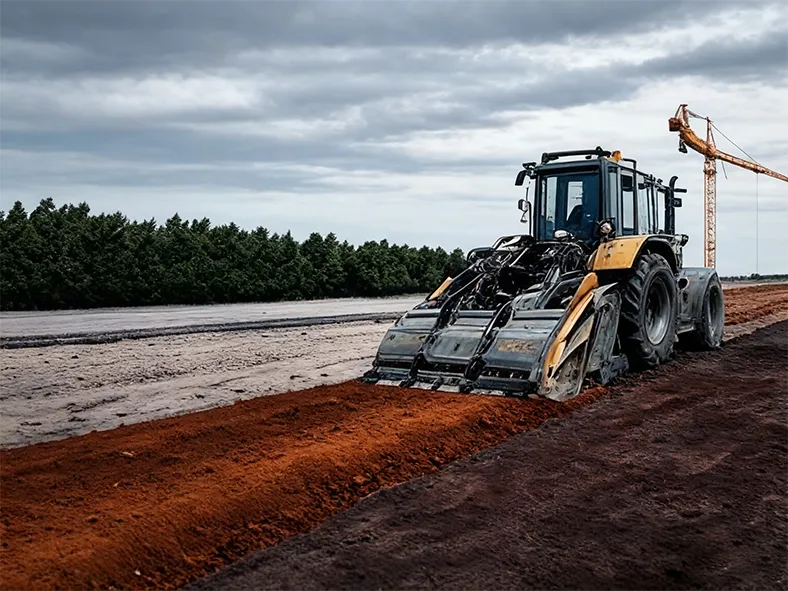
Un estabilitzador de sòls no és simplement una conreadora de gran resistència. És una planta mòbil de processament químic i mecànic.
Pulverització d'alt parell
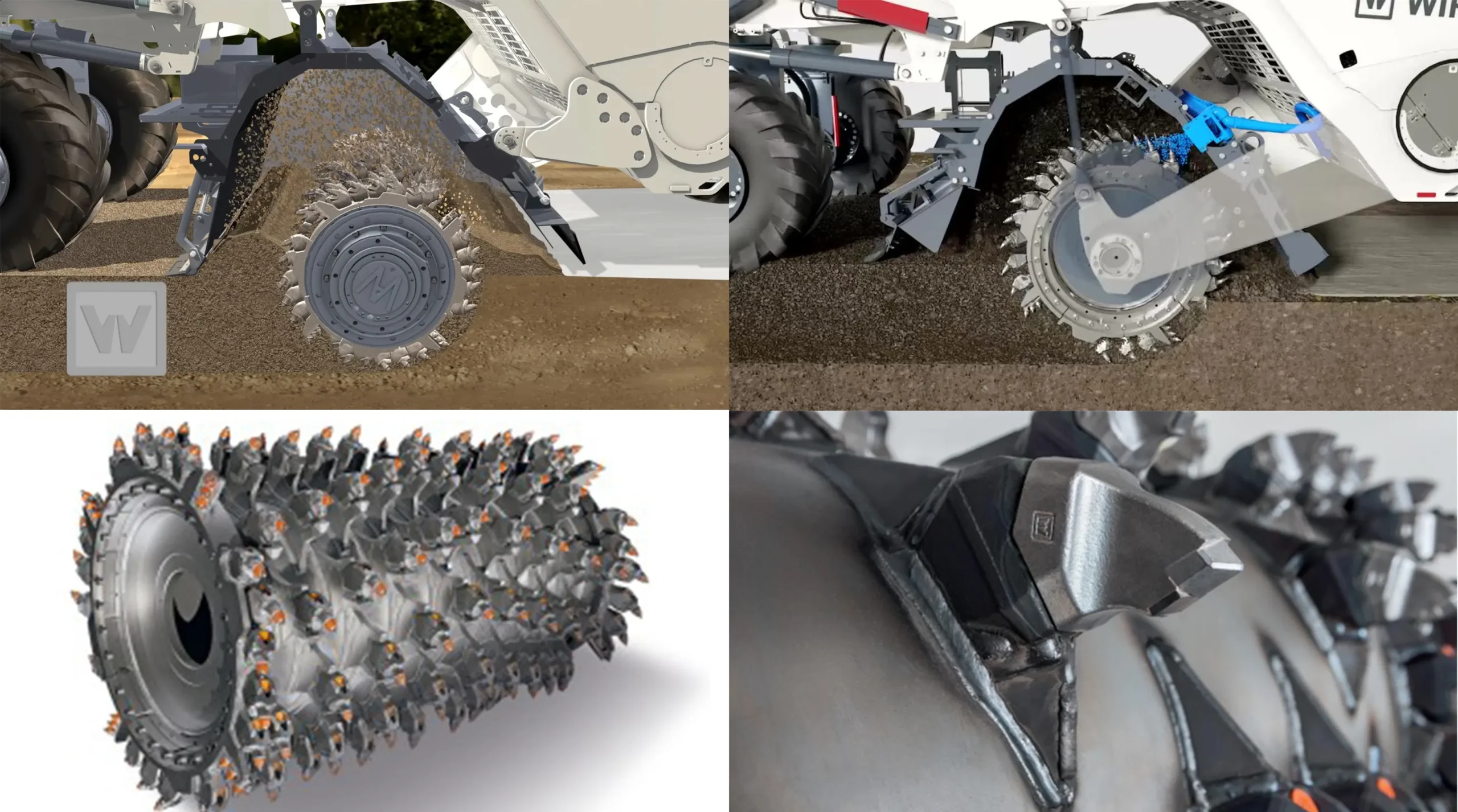
El cor d'una màquina Watanabe brasilera és el seu rotor de mescla. Equipat amb broques especialitzades de carbur de tungstè, el rotor gira a altes velocitats per polvoritzar el sòl in situ (in situ). Descompon la crosta dura i cuita pel sol i els grumolls de grans dimensions en una mida de partícula uniforme. Això augmenta la superfície del sòl, que és un requisit previ per a una reacció química eficaç.
Cambra de mescla integrada
A mesura que es polvoritza el sòl, la màquina introdueix agents estabilitzadors, com ara calç, ciment o polímers especialitzats. La cambra de mescla està dissenyada per crear un entorn turbulent on el sòl i l'aglomerant s'integren en una matriu perfectament homogènia. Això garanteix que no hi hagi "punts febles" a la capa tractada.
3. Aplicacions agrícoles essencials per als estabilitzadors del sòl
La versatilitat de la tecnologia d'estabilització del sòl permet aplicar-la en diverses facetes d'una fasenda a gran escala.
A. Camins d'accés a la granja (Rodovias Rurais)
Els camins d'accés són les "venes" d'una granja. Si fallen, la collita s'atura. Si s'utilitza un estabilitzador del sòl per crear una subbase estabilitzada, els agricultors poden:
- Augment de la capacitat de càrrega: les carreteres estabilitzades poden suportar camions de 40 tones que transporten soja o blat de moro sense que s'hi formen solcs.
- Resistent a la intempèrie: l'estabilització química redueix la permeabilitat del sòl, és a dir, que l'aigua s'escola per la superfície en lloc d'impregnar-se i crear fang.
- Reducció del manteniment: Els camins de terra tradicionals requereixen un anivellament cada pocs mesos. Una carretera estabilitzada pot durar anys amb una intervenció mínima.
B. Emmagatzematge de gra i fonaments de sitges
Una sitja de gra sencer exerceix una immensa pressió de càrrega puntual sobre el terra. Si el sòl s'assenta de manera desigual, l'estructura es pot inclinar o esquerdar. Els estabilitzadors del sòl s'utilitzen per crear una plataforma rígida i no expansiva abans d'abocar la plataforma de formigó, garantint la longevitat d'una infraestructura d'emmagatzematge costosa.
C. Parcs de bestiar (confinament)
En el sector ramader, el fang és una pèrdua de beneficis. El bestiar que viu en fang fins als genolls consumeix més energia per moure's i és propens a malalties de les peülles. L'estabilització del sòl a les zones de confinament (engreix) crea una superfície ferma i fàcil de netejar que millora el benestar animal i l'augment de pes.
4. La química de l'estabilitat: calç vs. ciment en l'agricultura
L'elecció de l'"aglutinant" depèn de l'anàlisi del sòl. A Brazil Watanabe, sovint ajudem els nostres clients a determinar l'enfocament químic correcte.
Estabilització amb calç (l'elecció per al Cerrado)
La calç (cal) és l'opció preferida per als sòls argilosos pesants que es troben a la regió del Cerrado.
- Intercanvi iònic: Els ions de calci de la calç substitueixen els ions de sodi/potassi de l'argila, fent que les partícules "floculin" o s'aglomerin, fent que el sòl es comporti més com la sorra.
- Reacció puzolànica: Amb el temps, la calç reacciona amb la sílice del sòl per formar un ciment natural, creant un canvi estructural permanent.
Estabilització del ciment
Per a sòls més granulars o llimosos, s'utilitza ciment Portland. Proporciona un ràpid guany de resistència, convertint el sòl en una base de "sòl-ciment". Això és ideal per a zones de trànsit intens prop de la porta principal de la granja o dels centres logístics.
5. Retorn de la inversió econòmica: per què té sentit la inversió
En el món competitiu de les matèries primeres globals, els marges són mínims. Un estabilitzador de sòl és una inversió que es paga sola mitjançant la reducció de Custo Brasil.
Reducció de costos logístics
Si s'utilitza un estabilitzador de sòl, un agricultor pot reduir la necessitat de comprar àrids fins a 90%. En lloc de pagar milers de camions de roca, utilitzen el sòl que ja tenen sota els peus.
Reducció del desgast de la màquina
Les carreteres irregulars i inestables destrueixen les suspensions i els pneumàtics dels tractors i els camions. En proporcionar una superfície llisa i estable, un estabilitzador del sòl allarga la vida útil de tota la flota agrícola.
Prevenció dels "colls d'ampolla de la collita"
Al Brasil, el marge per a una safra reeixida és ajustat. Una setmana de pluja pot atrapar una collita als camps si les carreteres no estan estabilitzades. La capacitat de transportar productes independentment del temps és efectivament una "assegurança" per als ingressos de la granja.
6. L'avantatge de "Watanabe": Versatilitat remolcada per tractor
Una de les raons per les quals Brazil Watanabe Soil Stabilizer Machine Co., Ltd. és líder al mercat és el nostre enfocament en els estabilitzadors de sòl remolcats per tractors.
Aprofitant els actius existents
La majoria de productors brasilers ja tenen tractors d'alta potència (més de 200 CV). Una recuperadora de carreteres autopropulsada és una inversió massiva i d'un sol propòsit. Tanmateix, els nostres estabilitzadors remolcats es connecten al vostre tractor existent a través de la TDP (Tomada de Força / PTO).
- Menors despeses de capital: Obteniu una estabilització de nivell professional a una fracció del cost d'una unitat autopropulsada.
- Facilitat de transport: Les unitats remolcades són més fàcils de moure entre diferents parcel·les o diferents fasendes.
- Manteniment més senzill: el sistema d'accionament és mecànic i robust, dissenyat per ser revisat per mecànics agrícoles locals.
7. Gestió ambiental i sostenibilitat
L'agricultura moderna està sota pressió per ser "verda". L'estabilització del sòl és inherentment un dels processos de construcció més respectuosos amb el medi ambient.
Reduir la petjada de carboni
En eliminar la necessitat de transportar grava a llargues distàncies, es redueix significativament el consum de dièsel i les emissions.
Control de l'erosió
El sòl inestable i solt és fàcilment arrossegat per les fortes pluges tropicals del Centro-Oeste. Això provoca la sedimentació dels rius i la pèrdua de la capa superior del sòl. Una carretera o un terraplè estabilitzat és resistent a l'erosió, mantenint el sòl on pertany i protegint les conques hidrogràfiques locals.
8. Pas a pas: Implementació de l'estabilització a la vostra granja
L'èxit amb un estabilitzador del sòl requereix un enfocament disciplinat.
Fase 1: Anàlisi del sòl
Abans que la màquina s'engegi, cal portar mostres a un laboratori per determinar el contingut d'humitat i la composició mineral del sòl. Això indica exactament quanta calç o ciment es necessita.
Fase 2: Estendre l'aglutinant
L'agent estabilitzador s'escampa uniformement per la zona. Per a projectes a gran escala, s'utilitzen camions escampadors especialitzats.
Fase 3: El pas de barreja
L'estabilitzador brasiler Watanabe passa per sobre de la zona. El rotor excava fins a una profunditat de fins a 50 cm, polvoritzant la terra i barrejant-la amb l'aglomerant en una sola passada.
Fase 4: Compactació
Immediatament després de la barreja, els corrons pesants (com ara els corrons de peu de pota o els corrons de tambor llis) compacten el sòl fins a la seva densitat Proctor màxima. Aquí és on es finalitza la resistència.
Els fonaments d'un Brasil més competitiu
El futur de l'agronegócio brasiler no es guanyarà només amb millors llavors o fertilitzants, sinó amb una millor infraestructura. L'estabilitzador del sòl representa el cim de l'enginyeria geotècnica accessible al productor modern.
En triar una solució de Brazil Watanabe Soil Stabilizer Machine Co., Ltd., esteu triant conquerir els elements. Esteu triant eliminar els riscos de l'estació de pluges, reduir els costos operatius i construir una granja que estigui literalment sobre terreny sòlid.
Esteu preparats per optimitzar la infraestructura de la vostra granja? Visiteu el nostre lloc web oficial a soilstabilizermachine.com per explorar la nostra gamma de màquines d'alt rendiment i trobar la solució d'estabilització perfecta per al vostre proper projecte. Construïu de manera més intel·ligent, construïu més fort, construïu amb Watanabe.
Les especificacions tècniques, els estudis de casos i les consultes d'enginyeria personalitzades estan disponibles si es sol·liciten. Brasil Watanabe: Estabilitzant el món, una hectàrea a la vegada.