In the realm of civil engineering, perhaps no project carries higher stakes than the construction of an airport runway. These massive stretches of pavement must withstand the concentrated, repetitive weight of aircraft weighing hundreds of tons, moving at speeds exceeding 250 km/h. The secret to a runway that lasts decades without deformation lies not just in the asphalt or concrete surface, but in the foundation beneath it. This is where the soil stabilizer machine enters the architectural narrative. As a cornerstone of modern infrastructure, a soil stabilizer is not merely a mixing tool; it is a geotechnical transformation engine. By integrating chemical binders with native earth, it creates a “semi-rigid” platform that provides the structural integrity necessary for aviation safety. In this comprehensive analysis, we explore the mechanical, chemical, and economic roles these machines play in ensuring our skies remain connected through resilient ground infrastructure.
Engineering the Subgrade: The Foundation of Aviation Safety
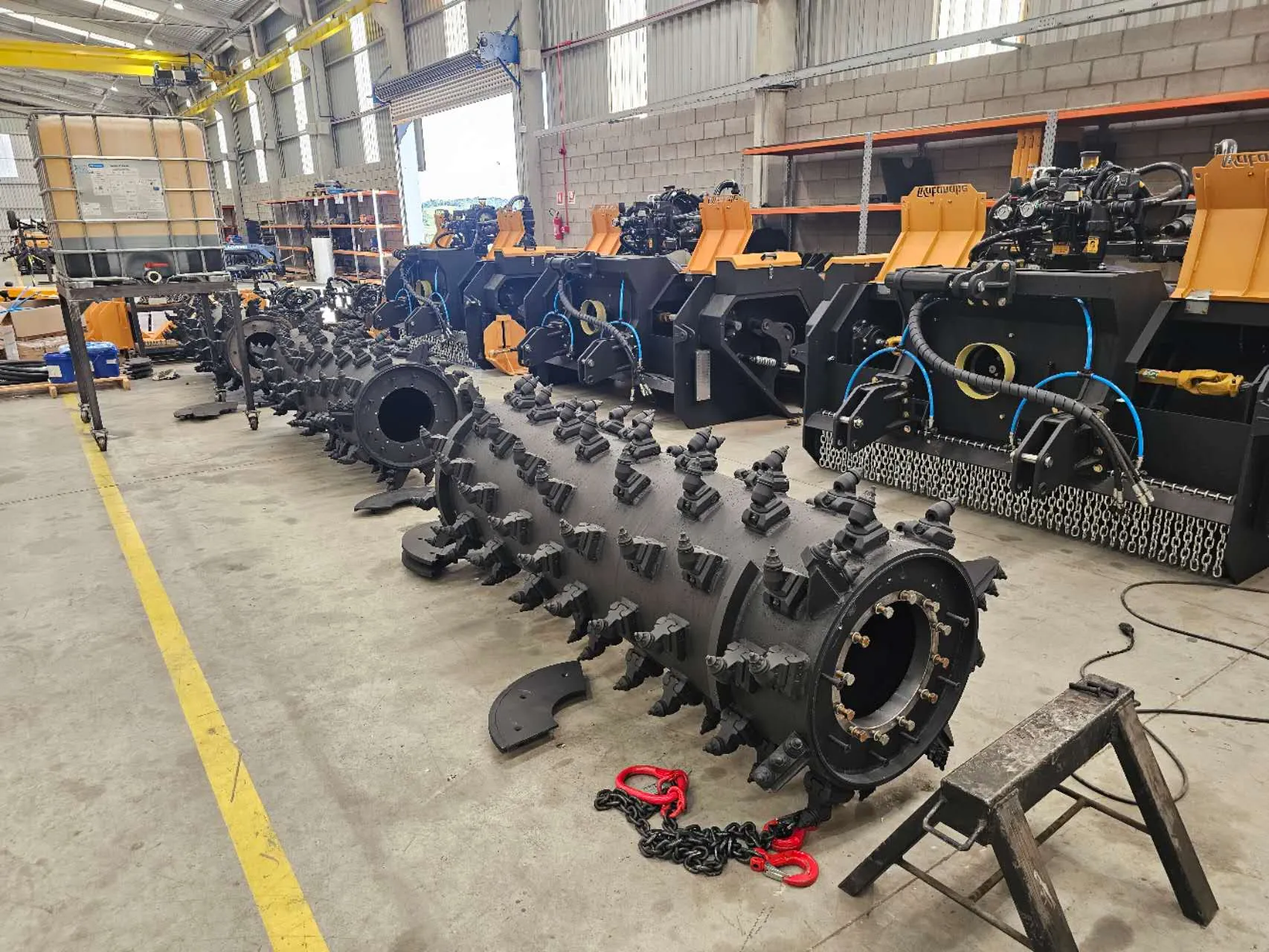
The primary role of a soil stabilizer in runway construction is the creation of a homogenous, high-strength subgrade. Traditionally, if the native soil at an airport site was of poor quality—such as expansive clay or loose silt—engineers were forced to “undercut” the site. This involved excavating thousands of tons of earth, hauling it away, and replacing it with imported crushed stone. However, this method is increasingly viewed as ecologically and financially bankrupt. The soil stabilizer offers a “circular” alternative. By using a high-performance rotor equipped with carbide-tipped teeth, the machine pulverizes the existing soil and mixes it in-situ with binders like lime, cement, or fly ash. This process alters the soil at a molecular level, reducing its moisture sensitivity and increasing its load-bearing capacity, measured by the California Bearing Ratio (CBR).
For an airport runway, the required CBR values are significantly higher than those for standard highways. An aircraft like the Boeing 777-300ER exerts immense pressure on a relatively small contact patch. If the subgrade lacks uniformity, differential settlement occurs, leading to “birdbaths” or cracks on the surface. A stabilizer ensures that the binder is distributed with surgical precision throughout the mixing chamber. Modern machines feature micro-processor-controlled injection systems that adjust the binder flow based on the travel speed and mixing depth. This level of control ensures that every square meter of the runway foundation meets the stringent Pavement Classification Number (PCN) requirements established by the International Civil Aviation Organization (ICAO). Without the mechanical homogenization provided by a stabilizer, achieving such uniformity across a 3,000-meter runway would be statistically impossible.
Mechanical Advantage and Site Synergy: Integrating the Fleet
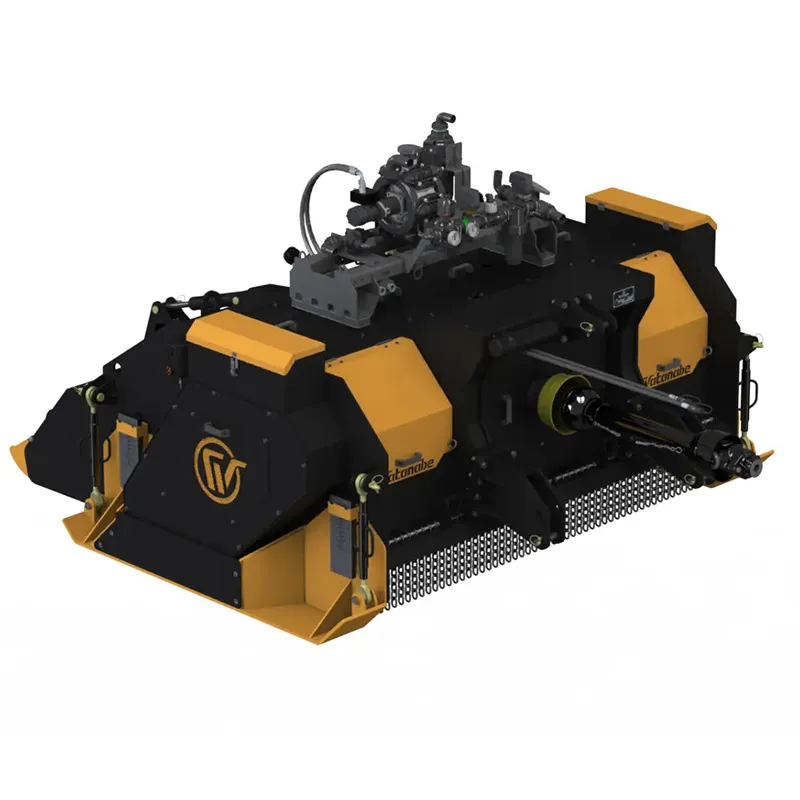
Integrating a soil stabilizer into an airport project requires a fleet that works in perfect mechanical harmony. The stabilization process is often preceded by rigorous site preparation. For instance, in “greenfield” airport projects located in rocky or uneven terrain, the ground must be cleared of large boulders and debris that could damage the stabilizer’s rotor. This is where the integration of a Rock Rake becomes essential. The rake prepares the medium, ensuring that the stabilizer can operate at its maximum depth without interruption. By clearing the “overburden,” the project maintains a steady tempo, which is critical when working within the tight windows of aviation construction schedules.
Furthermore, many modern airport upgrades involve the reclamation of old taxiways or aprons. Instead of discarding the old concrete or asphalt, a stone crusher is often utilized to pulverize the existing hard materials into manageable aggregates. These recycled materials are then spread across the new runway alignment. The soil stabilizer then passes through, mixing these crushed aggregates with the native soil and a cementitious binder. This creates what engineers call a “treated base layer.” This layer acts as a transition zone between the soft earth and the hard pavement, effectively dissipating the vertical loads from aircraft landing gear. The synergy between crushing, raking, and stabilizing allows construction firms to utilize 100% of the site’s existing materials, drastically reducing the carbon footprint associated with quarrying and transport logistics.
The Physics of the Mixing Chamber
To understand the stabilizer’s role, one must look inside the mixing chamber. As the machine moves forward, the rotor turns against the direction of travel (up-cutting). This action lifts the soil and binder, throwing them against the chamber walls and internal baffles. This creates a high-energy turbulent environment that breaks down soil clods. In airport construction, where the “Plasticity Index” (PI) of the soil must be strictly controlled to prevent swelling, this mechanical pulverization is the only way to ensure the chemical binder reaches every particle of clay. If the mixing is incomplete, “lumps” of untreated clay remain, which can later absorb water, swell, and cause a “heave” in the runway surface. A stabilizer’s ability to maintain a constant mixing volume regardless of terrain is what makes it a precision instrument in the aviation engineer’s toolkit.
Case Study: The Expansion of a Strategic Regional Hub in Brazil
Let us consider a practical application of these principles. A recent project involved the expansion of a regional cargo airport in the Amazonian region of Brazil. The challenges were twofold: extremely high soil moisture content and the lack of nearby aggregate quarries. The existing subgrade was primarily composed of silty clays with a CBR of less than 3%, which is insufficient for even a small jet. The logistical cost of bringing in crushed stone via river barge was projected to double the total project budget. The solution was a sophisticated soil stabilization strategy. Using a heavy-duty soil stabilizer, the engineering team treated the runway footprint with a combination of 2% lime (to dry the soil and reduce plasticity) and 4% Portland cement (to provide long-term structural strength).
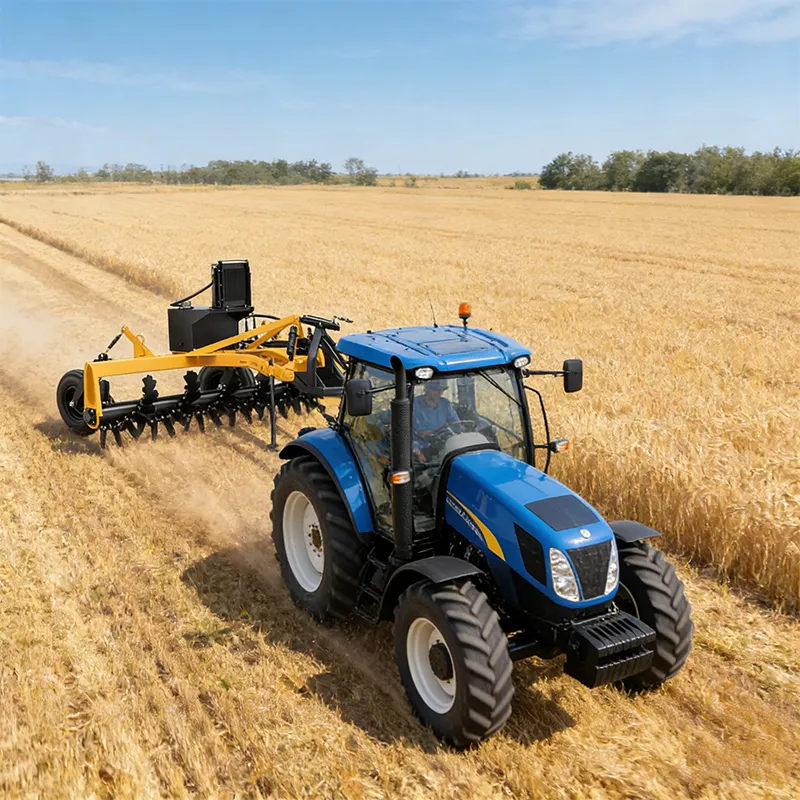
Before the stabilizer could begin, a tractor-mounted Rock Rake was used to clear tropical roots and large stones from the virgin soil. Once the stabilizer completed its passes, the resulting foundation achieved a CBR of over 80%, rivaling the strength of traditional stone bases. The project saved over $4 million in material transport costs and was completed three months ahead of schedule. More importantly, the environmental impact on the surrounding rainforest was minimized, as no new quarries were opened and heavy truck traffic was reduced by 85%. This case study exemplifies how soil stabilization technology isn’t just about building roads or runways; it’s about making infrastructure possible in environments where traditional methods would fail.
Moisture Management and Longevity: The Hydrological Role
A often overlooked role of the soil stabilizer in airport construction is its impact on the site’s hydrology. Runways are essentially giant “roofs” that collect immense amounts of rainwater. If that water penetrates the subgrade, the soil softens, and the runway fails. Stabilization creates a “hydrophobic” or water-resistant layer. When lime or cement is mixed into the soil, a pozzolanic reaction occurs, forming calcium-silicate-hydrate (CSH) gels. These gels fill the pores between soil particles, creating a dense matrix that prevents capillary action (water rising from the water table) and surface infiltration. For airports located in coastal areas or regions with high rainfall, this moisture-proofing is the primary defense against “pumping” (where water and fines are forced up through the pavement under the weight of aircraft).
Furthermore, the stabilizer allows for the creation of precise cross-slopes during the foundation stage. Because the stabilized material is easier to grade and compact than raw earth, engineers can ensure that the sub-base itself facilitates drainage toward the runway’s edge-drains. This “integrated drainage” approach extends the life of the surface pavement significantly. In many cases, a runway built on a stabilized subgrade can last 25 to 30 years before requiring a major overlay, compared to just 15 years for a traditional aggregate-based design. The economic role of the machine, therefore, extends far beyond the construction phase; it is an investment in reduced lifecycle maintenance and increased operational uptime for the airport authority.
The Cross-Industry Connection: From Aviation to Agriculture
While the focus here is on aviation, the engineering principles of soil management are universal. Interestingly, the same concerns about soil compaction and structural integrity are found in high-intensity industrial agriculture. For instance, the preparation of massive agricultural fields for crops like potatoes requires the same attention to “soil health” and “load-bearing capacity” as a runway. If a field road is unstable, a heavy potato harvester can become mired in mud, causing massive financial losses during the harvest window. Farmers are increasingly using stabilization techniques on their main access roads to ensure year-round mobility.
Similarly, the machines used to prepare the earth are cousins in design. A soil stabilizer’s rotor technology is refined and adapted for use in tools like the potato digger, which must gently but firmly manipulate the earth to extract tubers without damage. At Brazil Agricultural Balers Co., Ltd., we see this technological overlap every day. The precision required to mix cement into a runway foundation is the same precision required to prepare a furrow or apply fertilizers in a way that respects the soil’s biology. Understanding the mechanical behavior of soil—whether it is intended to support an Airbus A350 or a bumper crop of potatoes—is the core expertise that drives our innovation. The stabilizer is the ultimate bridge between the raw earth and the sophisticated needs of modern civilization.
Economic Efficiency and the Future of Runway Development
The final, and perhaps most compelling, role of the soil stabilizer is as a catalyst for economic feasibility. In many developing nations, the high cost of runway construction is a barrier to regional economic growth. By utilizing the soil stabilizer to harness local materials, governments can build more infrastructure with fewer resources. The “reduction in total cost of ownership” is dramatic. When you factor in the reduced need for haul trucks (fuel, tires, maintenance), the shorter construction timelines, and the increased durability of the final product, the ROI (Return on Investment) of a soil stabilizer becomes undeniable. It is the tool that makes “secondary” airports viable, opening up remote regions to trade, tourism, and emergency medical services.
As we look to the future, the integration of AIGC (AI-Generated Control) systems into these machines will further enhance their role. We are already seeing “smart stabilizers” that can analyze soil moisture in real-time and adjust binder ratios on the fly. This “zero-waste” approach to stabilization is the next frontier. Whether it is a stone crusher preparing recycled aggregates or a rock rake clearing the path, the objective remains the same: to turn the ground we walk on into the high-performance foundations we need to fly. In the narrative of modern construction, the soil stabilizer is not just a participant; it is the protagonist that makes the impossible, possible.
About Brazil Agricultural Balers Co., Ltd.
As a global leader in high-performance machinery, Brazil Agricultural Balers Co., Ltd. is dedicated to providing innovative solutions for both the construction and agricultural sectors. We specialize in robust, reliable equipment designed to handle the toughest soil conditions in the world. Our engineering philosophy is rooted in the Brazilian tradition of durability and efficiency, ensuring that our clients can tackle any project, from airport runways to industrial-scale farming, with absolute confidence.
Our diverse product range includes:
- Soil Stabilizer Machines
- Stone Crushers
- Rock Rakes & Rock Pickers
- Rotavators & Rotary Cultivators
- Potato Furrowers & Planters
- Potato Diggers & Harvesters
- Fertilizers & Compost Barn Systems
We pride ourselves on our technical expertise and our commitment to sustainable development. By providing the tools to transform local materials into structural assets, we are building a more connected and productive world. For more information on our advanced engineering solutions, please explore our full product catalog.